
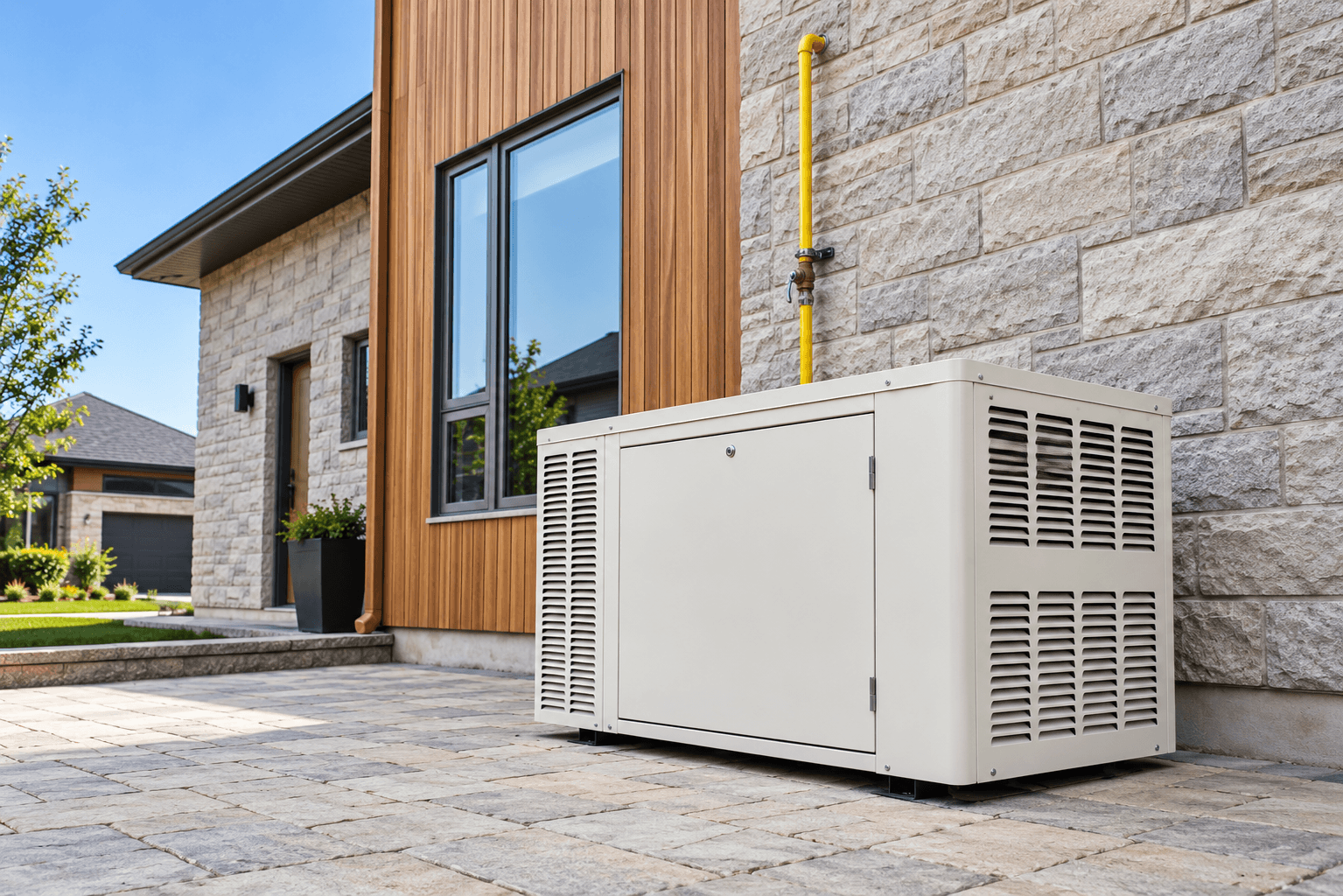
Whole-Home Backup Generators
Natural gas or propane, automatic or manual, sized around your actual home instead of a generic recommendation.
Energy Use InterviewWhy now
A generator is the direct answer to a direct problem
Solar and battery are about changing your relationship with the grid long-term. A standby generator is a simpler promise: when the power goes out, yours turns back on, automatically, on its own fuel supply, for as long as that fuel holds out. For a lot of Texas households, that straightforward reliability is exactly what they’re after.
The trade-off is that a generator needs fuel, needs permitting, and needs a place to sit on your property that satisfies your city and, if you have one, your HOA. None of that is complicated, but it's worth knowing upfront.
The three things that actually set your price
Generator size, whether your property already has a gas line or propane tank in place, and how much site work the install location needs. Two homes of the same size can land $5,000 apart in final cost depending on those three answers alone.
What actually determines the right setup
Fuel, placement, and how it switches on
Natural gas versus propane changes both cost and available capacity. Where the unit can legally and practically sit on your property changes with your HOA and city setback rules. And automatic versus manual transfer switching changes what actually happens the moment the grid goes down. We walk through all three in the interview, and if you're not sure about any of it, that's a completely normal answer, we'll bring in someone who can talk it through with you.
Quick answers
The specifics people usually ask about before the bigger conversation.
A common setup, a 22 kW air-cooled unit tied into an existing natural gas line, typically runs $11,000 to $14,000 turnkey. Full installed cost ranges $7,000 to $20,000 depending on generator size, whether new gas line or propane tank work is needed, the automatic transfer switch, and site prep like a concrete pad.
Ready to size a generator around your home?
Fuel source, placement, and how it switches on all change the answer.